Running an agency in today's fast-paced digital world means juggling a million things. You're managing clients, projects, teams, and, increasingly, their online presence. For many, this includes content marketing, and a crucial part of that is blogging. But managing multiple client blogs can be a nightmare. Enter the saas blog platform for agencies built for multi-tenancy. This isn't just about having a blog; it's about having a scalable, efficient system to deliver exceptional content results for all your clients.
Think about it: each client has unique needs, brand voices, and target audiences. Duplicating efforts, using separate logins, and struggling with inconsistent branding across platforms is a drain on resources and a recipe for mistakes. A multi-tenant SaaS blog solution changes the game entirely.
What Exactly is Multi-Tenancy in SaaS?
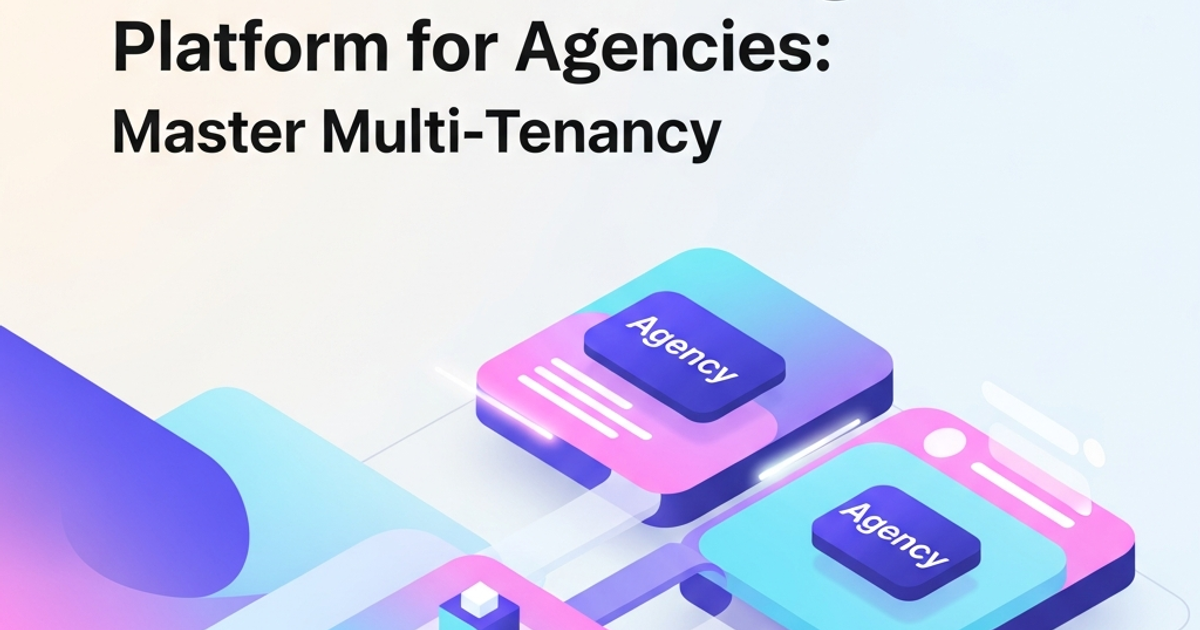
Before we dive deeper into why this is a game-changer for agencies, let's clarify what 'multi-tenancy' actually means in the context of a SaaS blog platform. Imagine a large apartment building. The building itself is the software infrastructure (the 'single instance'). Each apartment within that building is a 'tenant' – in our case, a client or a specific brand. While all tenants share the underlying structure, utilities, and security of the building, each apartment is private, customizable, and distinct. They can decorate their own space, have their own rules, and live their own lives without interfering with their neighbors.
In a multi-tenant SaaS blog platform, a single instance of the software serves multiple clients (tenants). Each client's data, configurations, and content are logically separated and secured, giving them the illusion of having their own dedicated application. This architecture is incredibly efficient for the SaaS provider (like BlogMe, which offers robust features for agencies) because they can manage one codebase and one infrastructure for many users, leading to economies of scale. For the agency, it means a centralized dashboard to manage all client blogs, streamlining workflows and boosting productivity.
Why Agencies Need a Multi-Tenant SaaS Blog Platform
Let's get down to brass tacks. Why is this specific type of software so vital for modern agencies?
-
Efficiency and Scalability: This is the big one. Manually managing dozens of client blogs on separate platforms is incredibly time-consuming. With a multi-tenant solution, you can onboard new clients, create new blog instances, and manage content across all of them from a single dashboard. Need to roll out a new content strategy for five clients? You can do it in a fraction of the time. This scalability is crucial for growth. As your agency lands more clients, your operational overhead doesn't need to skyrocket.
-
Streamlined Workflow and Collaboration: Centralized management means a unified workflow. Your content team can access all client projects, assign tasks, approve content, and monitor performance from one place. This reduces the friction of context switching and ensures everyone is on the same page. Features like shared content calendars, role-based access control, and approval workflows become seamless.
-
Cost-Effectiveness: Building and maintaining separate infrastructures for each client is prohibitively expensive. Multi-tenancy allows the SaaS provider to spread the costs of development, hosting, and maintenance across all tenants. This translates into more affordable pricing for agencies compared to dedicated, single-tenant solutions. Even powerful tools like BlogMe leverage this efficiency to offer advanced AI content generation and management at a competitive price point.
-
Consistent Branding and Performance: While each client gets a distinct blog, a multi-tenant platform often allows for templating and style guides. This helps maintain a consistent brand look and feel across all client blogs, reinforcing their identity. Furthermore, performance monitoring and SEO optimization can be managed centrally, ensuring all client blogs are performing optimally. Think about the power of having a unified SEO strategy applied across multiple client sites, monitored from a single interface.
-
Enhanced Security and Data Privacy: Reputable multi-tenant platforms employ robust security measures to ensure strict data isolation between tenants. This means one client's data is inaccessible to another. This is paramount for maintaining client trust and meeting compliance requirements.
-
Simplified Updates and Maintenance: Instead of updating multiple disparate systems, a multi-tenant SaaS solution means updates, security patches, and new features are deployed once by the provider and become available to all tenants. This saves agencies significant IT overhead and ensures they're always working with the latest, most secure version of the software.
-
White-Labeling Capabilities: For agencies, a key selling point of a multi-tenant platform is often the ability to white-label the entire experience. This means you can present the blog management interface to your clients under your agency's brand. It looks like your proprietary tool, enhancing your perceived value and professionalism. This is a feature many agencies find indispensable when looking for a saas blog platform for agencies.
You Might Also Like
- Multi-Tenant Blog SaaS: Architecture, Benefits, and Implementationin SaaS Growth
- Mastering Product-Led Growth Content Strategy for SaaS Successin SaaS Growth
- Readability & SEO: Level Up Your Blog Posts!in Content Marketing
Key Features to Look For in a Multi-Tenant Blog SaaS
So, you're convinced. You need a solution like this. What should you be looking for? Beyond the core multi-tenancy, here are features that will make or break your agency's content operations:
- AI-Powered Content Generation: Let's face it, producing high-quality content consistently is demanding. AI tools can significantly accelerate the process. Look for platforms that offer AI assistance for brainstorming topics, drafting articles, and even optimizing existing content. Tools like BlogMe excel here, providing AI that generates human-quality articles, complete with built-in SEO and fact-checking.
- Robust SEO Tools: Content is king, but SEO is how it gets found. Your platform should offer real-time SEO scoring, keyword suggestions, meta description optimization, and internal/external linking recommendations. Generative Engine Optimization (GEO) is also a game-changer, helping your content rank in AI-driven search results.
- Content Verification and Fact-Checking: With the rise of AI-generated content, accuracy is non-negotiable. Ensure the platform has built-in mechanisms to verify facts and ensure the content is trustworthy. This builds credibility for both your agency and your clients.
- User Roles and Permissions: You need granular control over who can do what within the platform, especially when managing multiple team members and clients. Role-based access ensures that, for instance, a junior content writer can't publish directly to a client's live blog without approval.
- Custom Domain Support: Each client needs their blog on their own domain (e.g.,
blog.clientA.com). The platform must seamlessly support this. - Performance Analytics: Track key metrics like traffic, engagement, and conversions for each client's blog. This data is crucial for demonstrating ROI and refining strategy.
- Social Media Integration: Auto-publishing blog posts to various social media channels can save immense time and ensure consistent social presence.
- Featured Image Generation: Visually appealing content is vital. AI-powered featured image generation can add a professional touch without requiring a graphic designer for every post.
- White-Labeling: As mentioned earlier, the ability to brand the platform as your own is a huge plus for agency perception.
Implementing a SaaS Blog Platform for Agencies Effectively
Adopting a new platform is one thing; implementing it successfully is another. Here’s how to make the transition smooth:
-
Define Your Needs: Before you even look at platforms, list your agency's specific requirements. What are your biggest pain points? What features are non-negotiable? How many clients do you anticipate managing?
-
Pilot Program: If possible, test a platform with one or two clients first. This allows you to identify any workflow issues or training needs before a full-scale rollout.
-
Team Training: Invest time in training your team. Ensure everyone understands how to use the platform's features, from content creation to performance analysis.
-
Client Communication: Be transparent with your clients about the new system. Highlight the benefits – improved efficiency, better reporting, faster content production. For example, when using a tool like blogme.io for AI article generation, you can assure clients of high-quality, fact-checked content delivered reliably.
-
Integrate with Existing Workflows: Map how the new blog platform fits into your existing project management, CRM, and reporting tools. Seamless integration prevents disruption.
The Future is Centralized and Intelligent
The demands on agencies are only increasing. Staying competitive means leveraging technology to work smarter, not just harder. A multi-tenant saas blog platform for agencies is no longer a luxury; it's a necessity for efficient, scalable, and profitable content marketing services. It allows you to offer superior results to more clients without burning out your team or your budget. By choosing a platform that integrates AI, robust SEO, and seamless management, you're not just buying software – you're investing in the future growth and success of your agency.
Consider the evolution of search itself – with AI at the forefront, ensuring your clients' content is not only accurate and engaging but also optimized for AI discovery (like through GEO features) is becoming paramount. A good platform handles this complexity for you. It's about building a content engine that powers client success, reliably and efficiently, day in and day out.
BlogMe Team
Expert insights and analysis to keep you informed and ahead of the curve.