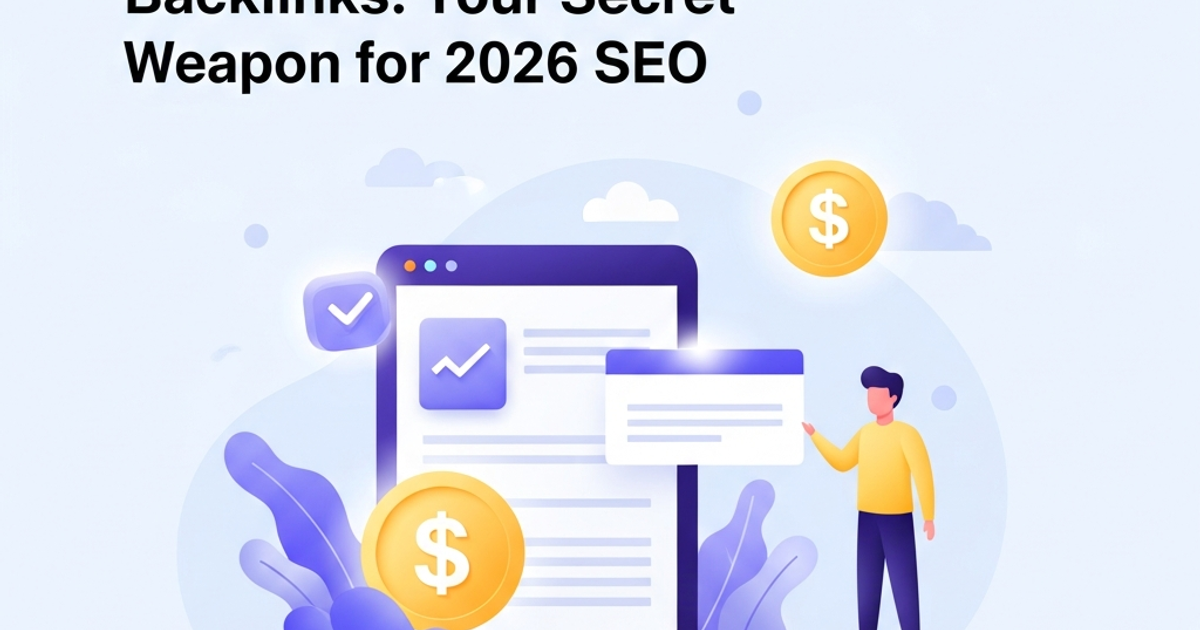
Backlinks: Your Secret Weapon for 2026 SEO
Hey there, fellow content creators and SEO enthusiasts! It's your pals here at the BlogMe Blog, buzzing with the latest on what's cooking in the world of AI-powered content, SEO, and those all-important GEO insights. Today, we're diving deep into a topic that's been a cornerstone of SEO for years and will continue to be a massive player in 2026: backlinks.
If you've ever wondered how to get backlinks for your blog that actually move the needle, you're in the right place. Forget the spammy tactics of yesteryear; we're talking about building genuine authority and trust that search engines absolutely love.
The Backlink Renaissance: Why They Still Reign Supreme
Think of backlinks as votes of confidence from other websites. When a reputable site links to yours, it's essentially saying, "Hey, this content is valuable, trustworthy, and worth checking out!" Google and other search engines interpret these links as endorsements, signaling that your blog is a credible source of information. In the grand scheme of SEO Blogging Strategies 2026, this is huge.
Why? Because the digital landscape is getting noisier. As AI continues to churn out content at an unprecedented rate (which, by the way, is where BlogMe shines, helping you create high-quality, original pieces!), distinguishing truly valuable content becomes paramount. Backlinks act as a powerful filter, helping search engines (and users!) identify the cream of the crop.
I remember when I first started blogging. My focus was almost entirely on keyword stuffing and hoping for the best. The results? Crickets. It wasn't until I shifted my strategy to focus on earning high-quality backlinks that I started seeing real traffic and ranking improvements. It was a game-changer, and it's a lesson I want to share with all of you.
So, let's get down to brass tacks. How do we actually go about earning these coveted links? It’s not magic; it’s strategy.
1. Create Link-Worthy Content (Seriously, This is Step Zero)
This might sound obvious, but it's the absolute foundation. You can't expect people to link to mediocre content. What makes content “link-worthy”?
- Uniqueness and Originality: Does your content offer a fresh perspective, new data, or a unique take on a topic? AI can help you brainstorm and structure, but your human insight is what makes it stand out. For instance, if you're writing about AI in content creation, don't just regurgitate what everyone else is saying. Share your own experiments, your successes, your failures. We've seen incredible results on BlogMe by pairing our AI's drafting capabilities with expert human editing and unique case studies.
- Depth and Comprehensiveness: Are you covering a topic thoroughly? Think ultimate guides, in-depth tutorials, or detailed research reports. People are more likely to link to resources that answer all their questions in one place.
- Data and Statistics: Original research or curated, reliable statistics are gold. If you conduct a survey or analyze data relevant to your niche, other bloggers and publications will want to cite your findings.
- Visual Appeal: Infographics, compelling charts, and high-quality images make content more shareable and, therefore, more linkable. Tools can help you create these, but a clear message and design concept are key.
- Problem-Solving Content: Does your content solve a reader's problem or answer a burning question? This type of practical, actionable advice is always in demand.
Think about the content you link to. It's usually something that impressed you, taught you something new, or provided immense value. Aim to be that resource for others.
2. The Art of the Guest Post (Done Right)
Guest blogging is a classic for a reason. It allows you to tap into established audiences and, crucially, earn a backlink from another reputable domain. But the key is to do it strategically.
- Target Relevant Blogs: Don't just pitch any site. Find blogs in your niche that have a similar or slightly higher domain authority than yours. Look for blogs that already feature guest posts. This shows they're open to it.
- Offer Unique Value: Don't pitch a topic you've already covered extensively on your own blog. Offer something new, something that complements their existing content but doesn't overlap completely. Perhaps you have a unique case study related to their audience's pain points. When I was building authority in the geo-targeting space, I found a few marketing blogs that were discussing location-based ads. I pitched them a detailed breakdown of how BlogMe’s GEO insights could improve campaign performance, complete with anonymized data examples. The resulting guest posts drove significant referral traffic and earned me some fantastic backlinks.
- Write High-Quality Content: Your guest post needs to be as good, if not better, than your own blog content. This is your chance to impress both the editor and their readers.
- Placement Matters: Ensure your author bio link is clearly visible and points to your blog's homepage or a relevant internal page. Some sites allow contextual links within the body of the post – these are even more valuable!
You Might Also Like
- Unlock Blog Growth: Your Best Keyword Research Strategyin Marketing & SEO
- Blog SEO 2026: Your Ultimate Optimization Guidein Marketing & SEO
- Your Ultimate On-Page SEO Checklist for Bloggersin Marketing & SEO
3. Broken Link Building: The Detective Work Pays Off
This is a bit more of a "behind-the-scenes" tactic, but it's incredibly effective for securing high-quality backlinks. The process is straightforward:
- Find Resources: Identify relevant websites in your niche that host a lot of content (e.g., resource pages, lists of tools, historical articles).
- Scan for Broken Links: Use a broken link checker tool (there are many free and paid options) to find links on those pages that no longer work (they lead to a 404 error).
- Offer Your Content as a Replacement: Reach out to the website owner or editor. Politely inform them about the broken link and suggest your own high-quality content as a suitable replacement. Make sure your content genuinely fits the context of the broken link.
This tactic is brilliant because you're not asking for something out of the blue; you're offering a helpful service by pointing out an error and providing a solution. It's a win-win.
4. Leverage Your Relationships and Networking
This is where Off-Page SEO truly shines. Building genuine relationships within your industry can lead to organic link opportunities. Don't underestimate the power of community.
- Collaborate with Others: Partner with other bloggers or businesses for joint webinars, e-books, or research projects. These collaborations naturally create opportunities for cross-promotion and backlinks.
- Participate in Roundups: Many bloggers regularly publish "roundup" posts where they ask experts for their opinions on a specific topic. If you're asked, provide insightful answers. This often results in a backlink and exposure to a new audience.
- Engage on Social Media: While social signals aren't direct ranking factors, they can increase the visibility of your content, leading to more eyes on your work and, consequently, more opportunities for backlinks. Share your content, engage in conversations, and build your network.
- Mention Influencers (Thoughtfully): When you create a piece of content that mentions or cites an influencer or a reputable brand, let them know! A simple, personalized email can sometimes lead to them sharing your content or even linking to it if they find it particularly valuable. We've found that mentioning specific AI advancements or GEO-intelligence findings from industry leaders in our blog posts often prompts them to engage and share.
5. Digital PR and Linkable Assets
This is a more advanced strategy, but it can yield some of the most powerful backlinks. It involves creating exceptional "linkable assets" and then actively promoting them to relevant publications.
- What’s a Linkable Asset? This could be a comprehensive guide, an interactive tool, a unique dataset, an infographic, or even a compelling story. The idea is to create something so valuable that journalists, bloggers, and other websites want to link to it.
- Pitching to Media: Once you have a killer asset, you need to get it in front of the right people. This involves targeted outreach to journalists, bloggers, and relevant publications. Highlight why your asset is relevant to their audience and how it would enhance their content.
This is a strategy we're increasingly focusing on with BlogMe. For example, we're developing a proprietary AI tool that analyzes content trends across different GEOs. Creating a detailed report based on its findings and then pitching that report to tech journalists and marketing publications is a prime example of digital PR that can generate high-authority backlinks.
Moving Forward with Your Backlink Strategy in 2026
As we look ahead to 2026, the core principles of earning quality backlinks remain consistent: create outstanding content and build genuine relationships. However, the methods of discovery and outreach will continue to evolve. AI-powered tools, like those offered by BlogMe, can significantly streamline your content creation process, freeing you up to focus on the human element of SEO – building those crucial connections and crafting compelling outreach.
Remember, how to get backlinks for blog posts isn't just about quantity; it's about quality and relevance. A single link from a highly authoritative and relevant website is worth far more than dozens of low-quality, spammy links. Focus on becoming a trusted resource in your niche, and the backlinks will follow.
Keep experimenting, keep creating, and most importantly, keep engaging with your community. That's the secret sauce for SEO success in 2026 and beyond. Happy linking!
BlogMe Team
Expert insights and analysis to keep you informed and ahead of the curve.