
Product-Led Growth Content: Top Examples to Inspire You
Ever felt like you're shouting into the void with your marketing content? You pour hours into articles, social posts, and guides, but the needle barely moves. It's a familiar frustration. But what if your content could do more than just inform? What if it could actively drive sign-ups, upgrades, and customer loyalty? Welcome to the world of Product-Led Growth (PLG) content.
PLG content isn't just about talking about your product; it's about letting your product do the talking. It's content that solves a user's problem, and in doing so, subtly but effectively showcases the value of your product. Instead of a hard sell, it’s a soft, organic invitation to experience the solution firsthand. Think of it as a free sample that's so good, you can't wait to buy the whole thing.
We're going to dive deep into some of the best product-led growth content examples out there, exploring why they work and how you can adapt their strategies. And as someone who lives and breathes content creation, I'm always looking for ways to make the process smarter. Tools like BlogMe are fantastic for streamlining the creation and optimization of content, ensuring it reaches the right audience effectively.
What Exactly IS Product-Led Growth Content?
Let's break it down. Product-Led Growth is a business strategy where the product itself is the primary driver of customer acquisition, expansion, and retention. Instead of relying heavily on sales and marketing teams to close deals, PLG focuses on users experiencing the product's value as early and as easily as possible.
Product-Led Growth content is the specific content that supports this strategy. It’s designed to:
- Educate: Teach users about a problem they have or a goal they want to achieve.
- Demonstrate: Show how the product solves that problem or helps achieve that goal.
- Onboard: Guide new users to their "aha!" moment within the product.
- Retain & Expand: Provide ongoing value to keep users engaged and encourage upgrades or wider adoption.
The key difference between traditional content marketing and PLG content is the direct integration and reliance on the product experience. PLG content often lives within the product or is so closely tied to it that using the product is essential to fully understanding or benefiting from the content.
My own journey with content creation has been transformed by understanding this shift. I used to focus solely on SEO for external articles, but realizing how content could work inside the product to convert free users to paid ones was a game-changer. It’s about meeting users where they are, and often, that’s already inside your application.
The Best Product-Led Growth Content Examples in Action
Ready to see PLG content in the wild? Let's look at some standout examples across different types of products.
1. Interactive Tutorials & In-App Guides (The "Learn by Doing" Approach)
This is perhaps the most direct form of PLG content. Instead of reading a manual or watching a video, users are guided through the actual product interface to complete a task. This hands-on approach is incredibly effective for demonstrating value quickly.
- Example: Notion’s Onboarding Flow
- When you first sign up for Notion, it doesn't just present you with a blank canvas. It offers a series of interactive walkthroughs tailored to common use cases like project management, note-taking, or personal wikis. You click through the actual interface, adding tasks, creating databases, and formatting text as the guide instructs.
- Why it works: You learn by doing. By the end of the tutorial, you've not only understood a feature but have also created something useful, solidifying the value proposition. It reduces the initial learning curve and makes the product feel immediately powerful.
- Example: Figma’s Interactive Feature Demos
- Figma, the collaborative design tool, often uses interactive demos on its website or within its product to showcase new features. You can click around and manipulate elements directly in a simulated environment.
- Why it works: It removes abstract explanations. You can feel the ease of use and the power of the feature without a lengthy setup or commitment. It’s a low-friction way to experience innovation.
How to apply it: Think about the core actions a new user needs to take to get value from your product. Can you build a guided, step-by-step walkthrough within your app that leads them through these actions? This is a prime area where investing in smart content tools can pay off, ensuring your guides are clear, concise, and error-free.
2. Template Galleries & Use Case Libraries (The "See What's Possible" Approach)
Sometimes, users know they need a solution but aren't entirely sure how to implement it within a new tool. PLG content in the form of templates and use case examples provides inspiration and a shortcut to success.
- Example: Airtable’s Template Gallery
- Airtable offers a vast library of pre-built templates for everything from marketing campaign tracking and bug reporting to event planning and personal budgeting. Users can browse, select a template, and instantly have a functional base set up in Airtable.
- Why it works: It removes the “blank slate” paralysis. Users can see concrete examples of how others are successfully using Airtable for their specific needs. They can then customize these templates or use them as a foundation, demonstrating the product's flexibility and power without requiring them to build from scratch.
- Example: Canva’s Design Templates
- While Canva is arguably a product for content creation, its template library is a masterclass in PLG. Users don’t need to be graphic designers to create stunning visuals. They pick a template (for social media, presentations, posters, etc.) and customize it.
- Why it works: It democratizes design. The templates are the product-led content that enables users to achieve their goals (creating professional-looking graphics) instantly, driving adoption and habitual use.
How to apply it: Identify common workflows or desired outcomes your target audience has. Can you create pre-built solutions (templates, configurations, sample projects) within your product that users can adopt with one click? This is where understanding user needs deeply, perhaps through AI-driven insights, becomes invaluable.
You Might Also Like
- Unlock Blog Growth: Your Best Keyword Research Strategyin Marketing & SEO
- Blog SEO 2026: Your Ultimate Optimization Guidein Marketing & SEO
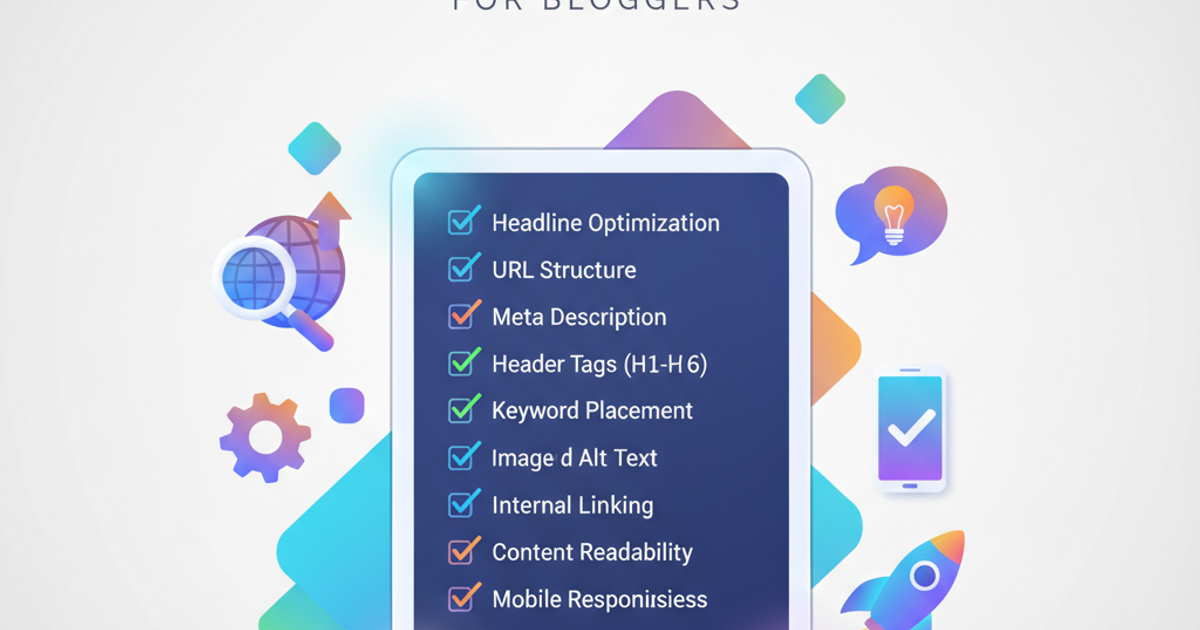
- Your Ultimate On-Page SEO Checklist for Bloggersin Marketing & SEO
3. Educational Blog Content & Knowledge Bases (The "Solve Problems Around the Product" Approach)
This is where traditional content marketing and PLG content beautifully intersect. High-quality, educational content can attract users by addressing their pain points, and then naturally guide them toward the product as the solution.
- Example: HubSpot’s Marketing Blog & Free Tools
- HubSpot has built an empire on providing incredibly valuable, free educational content about marketing, sales, and customer service. Their blog is packed with guides, tips, and strategies. Crucially, many of these articles subtly (and sometimes overtly) point to HubSpot's CRM, marketing automation, or sales software as the tool to implement the advice.
- Why it works: They attract their ideal customer profile through valuable content before the user even considers a tool. Then, when the user realizes they need software to execute the strategies discussed, HubSpot is top-of-mind. Their free tools (like their CRM or email signature generator) also act as entry points, providing immediate value and a taste of the paid product.
- Example: Asana’s “How-To” Guides and Best Practices
- Asana’s blog and help center offer a wealth of content on project management methodologies, team collaboration tips, and productivity hacks. This content helps users become better at their jobs, and naturally, Asana becomes the tool they use to implement these best practices.
- Why it works: It positions Asana not just as a tool, but as a thought leader and partner in productivity. The content addresses user challenges directly, making the product the obvious solution for overcoming them. This type of content, when optimized correctly, can be a powerful acquisition channel. Leveraging AI tools can help ensure this content is not only relevant but also discoverable via search engines, making it a cornerstone of any product-led growth content strategy.
How to apply it: Map out the problems your users face that your product helps solve. Create in-depth guides, tutorials, and articles addressing these problems. Integrate calls-to-action (CTAs) that encourage users to try the relevant feature in your product or sign up for a free trial. Tools that offer automated SEO and GEO optimization, like BlogMe, are essential here to ensure your educational content gets found.
4. Community Forums & User-Generated Content (The "Social Proof & Peer Support" Approach)
Leveraging your user base to create content is a powerful PLG strategy. When users share their successes, troubleshoot issues, and offer tips, it builds trust and demonstrates real-world product value.
- Example: Salesforce Trailblazer Community
- Salesforce has fostered a massive community where users can ask questions, share solutions, earn badges, and connect with peers. This ecosystem is rich with user-generated content, from how-to guides created by power users to discussions about best practices.
- Why it works: It provides authentic social proof. Potential customers see that real people are successfully using and getting value from Salesforce. It also offers a support channel that reduces the burden on formal customer support and encourages deeper product engagement.
- Example: Slack Community Examples
- While not a single forum, Slack communities (often centered around specific industries or use cases) are filled with users sharing tips on how they leverage Slack integrations and features. You'll find discussions on the best apps to connect, workflow automations, and channel management strategies.
- Why it works: It showcases the product's extensibility and provides practical, peer-vetted advice. Users learn new ways to use the product from others facing similar challenges.
How to apply it: Consider building a community forum, a dedicated Slack channel, or encouraging user-submitted case studies. Actively participate, foster a positive environment, and highlight valuable user contributions. This human element is something even the best AI content engines complement, rather than replace.
Measuring the Success of Your PLG Content
Creating great PLG content is one thing; knowing if it's working is another. Here are key metrics to track:
- Activation Rate: How many users successfully complete a key action after interacting with your content (e.g., completing an in-app tutorial, using a template)?
- Conversion Rate: How many users convert from free to paid plans after engaging with specific PLG content or features? This is a crucial metric for understanding the direct impact on revenue.
- Feature Adoption: Are users adopting the features highlighted in your PLG content? Track usage of specific tools or workflows introduced through tutorials or templates.
- Retention Rate: Do users who engage with PLG content stick around longer? Look at churn rates for users who have experienced key PLG touchpoints.
- Time to Value (TTV): How quickly do new users reach their "aha!" moment after encountering your PLG content? Shorter TTV often leads to higher activation and retention.
The Role of AI in PLG Content Creation
Creating high-quality, targeted PLG content consistently can be a massive undertaking. This is where AI-powered platforms like BlogMe come into play. They can help:
- Generate Drafts: Quickly create initial drafts for blog posts, tutorials, or help documentation based on specific prompts and data.
- Optimize for SEO & GEO: Ensure your content is discoverable through search engines and optimized for AI search advancements.
- Verify Information: Integrate fact-checking to maintain accuracy and build trust.
- Personalize Experiences: Potentially tailor content recommendations based on user behavior within the product.
While AI is a powerful assistant, remember that the best PLG content is still rooted in genuine user understanding and empathy. AI can amplify your efforts, making it easier to produce the volume and quality needed to truly leverage the power of product-led growth.
Final Thoughts on PLG Content
Product-led growth content is a powerful evolution in how businesses connect with their customers. It shifts the focus from convincing people to buy to helping them achieve. By embedding value directly into the user experience and using content to guide, educate, and inspire, you can create a more organic, effective, and sustainable growth engine.
Whether it's through interactive tutorials, inspiring templates, or invaluable educational resources, the goal is the same: let the product shine by empowering the user. Start looking at your content not just as marketing collateral, but as an integral part of the product experience itself. The best product-led growth content examples show us that when done right, your product can become your most effective salesperson.
BlogMe Team
Expert insights and analysis to keep you informed and ahead of the curve.