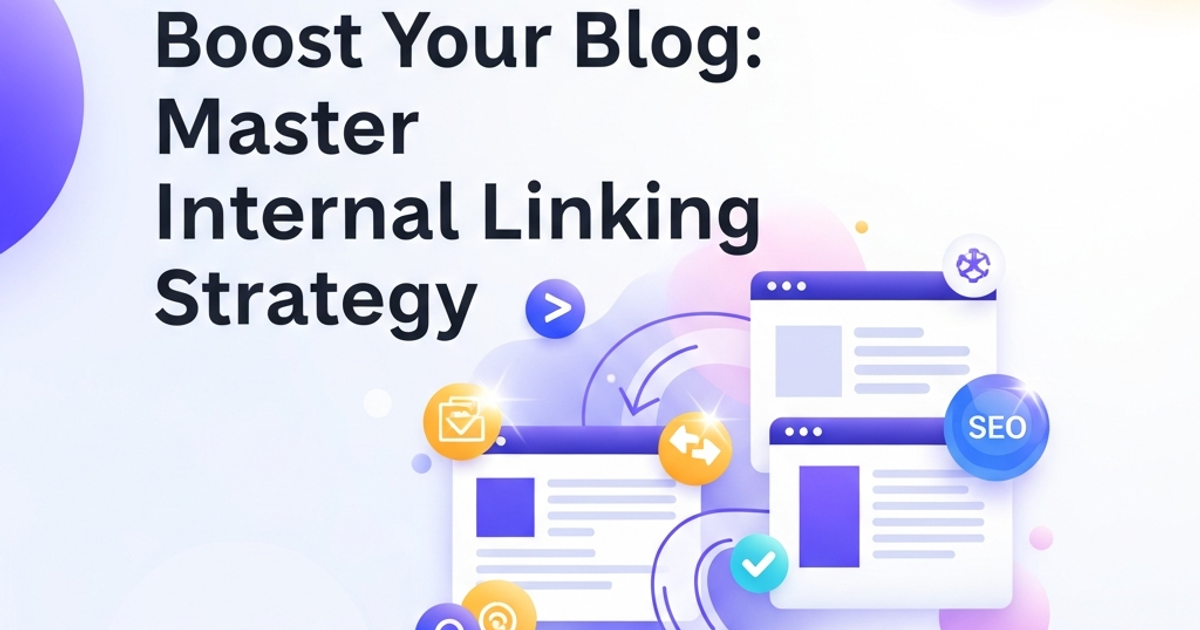
Ever feel like your blog posts are islands, floating in the vast ocean of the internet with no connection to each other? If you're nodding along, you're likely missing out on a powerhouse SEO tactic: internal linking. It's not just about adding a few blue links here and there; a strategic approach can significantly boost your site's authority, improve user experience, and climb those search engine rankings. Let's dive into crafting an effective internal linking strategy blog posts that will make your content work harder for you.
Think of your blog like a library. Without a proper cataloging system and clear signs, finding a specific book can be a frustrating experience. Internal links are those signs and connections. They guide both your readers and search engine crawlers through your content, helping them understand the relationships between your articles and discover new, valuable information.
Why Internal Linking is Your SEO Secret Weapon
Search engines like Google use crawlers to discover and index content on the web. When these crawlers visit your site, internal links act as pathways. By linking relevant articles together, you're essentially telling Google, "Hey, these pieces of content are related and important!" This helps distribute 'link equity' (also known as link juice) across your site, signaling to search engines which pages are the most valuable and authoritative.
But it's not just about pleasing the algorithm. A good internal linking strategy blog posts also dramatically improves user experience. Imagine a reader lands on an article about "Beginner SEO Tips." If that article thoughtfully links to related posts like "Understanding Keywords," "What is a Meta Description?" or "How to Write Engaging Headlines," your reader is more likely to stick around, explore more of your content, and ultimately, become a more engaged visitor. This increased engagement signals to Google that your site offers valuable, comprehensive content, which can positively impact your rankings.
I remember when I first started blogging, I treated each post as a standalone piece. My traffic was stagnant, and I couldn't figure out why. It wasn't until I started systematically linking my articles that I saw a real difference. Suddenly, articles that used to get barely any traffic were being discovered through related posts, and my overall site authority began to climb. It was a game-changer!
Crafting Your Strategic Internal Linking Plan
So, how do you move from haphazard linking to a truly strategic approach? It starts with understanding your content and your audience.
-
Audit Your Existing Content: Before you can link effectively, you need to know what you have. Go through your blog posts and identify your cornerstone content – your most important, comprehensive articles that cover key topics in your niche. These are the pages you want to build authority around.
-
Identify Linking Opportunities: As you review your content, look for natural opportunities to link between related posts. Ask yourself:
- Does this post mention a topic that is explained in more detail in another post?
- Could this post serve as a logical next step for a reader interested in the current topic?
- Does this post provide supporting evidence or context for another article?
-
Use Descriptive Anchor Text: Anchor text is the clickable text of a hyperlink. Generic anchor text like "click here" is a missed opportunity. Instead, use descriptive anchor text that accurately reflects the content of the linked page. For example, instead of "read more here about SEO," use "learn more about on-page SEO techniques."
-
Prioritize Linking to Important Pages: Make sure your cornerstone content and your most important (often highest-converting) pages receive plenty of internal links from other relevant posts. This helps funnel link equity to your most valuable assets.
-
Link Contextually and Naturally: Don't force links where they don't belong. The links should add value to the reader and make sense within the flow of the content. Over-optimizing or stuffing your content with irrelevant links can actually harm your SEO and frustrate your users.
-
Don't Forget New Content: Every time you publish a new blog post, make it a habit to go back to older, relevant posts and link to your new piece. Also, ensure your new post links out to relevant older content.
Example: Let's say you just published a detailed guide on "Advanced Link Building Strategies." You'd want to link to this new post from your older articles on "Beginner SEO," "Content Marketing Basics," and "Understanding Backlinks." Conversely, your new "Advanced Link Building" post should link back to those foundational articles where appropriate.
You Might Also Like
- Readability & SEO: Level Up Your Blog Posts!in Content Marketing
- Unlock Your Blog's Potential with Smart Internal Linkingin Content Marketing
- Unlock Blog Growth: Your Best Keyword Research Strategyin Marketing & SEO
Tools and Techniques for Smarter Linking
Manually auditing and linking can be time-consuming, especially for blogs with a large volume of content. This is where smart tools can make a huge difference. For instance, when I'm generating new content ideas and ensuring I have a solid internal linking strategy blog posts in place, I often turn to solutions that streamline the process.
Platforms like BlogMe are designed to simplify content creation and optimization. Their AI engine not only helps generate high-quality articles but also includes built-in SEO scoring and optimization features. This means you can get suggestions for internal linking directly within the content creation workflow. Imagine writing an article and instantly seeing recommendations for relevant internal links based on your existing blog content. That’s the kind of efficiency that can transform your content strategy. Tools like BlogMe help ensure that as you create new content, you're also strengthening your existing site structure. It takes the guesswork out of many on-page SEO tasks, allowing you to focus on creating great content and driving traffic.
Beyond dedicated tools, consider using your website's search function to find relevant older posts when you're writing new ones. If you're writing about "email marketing automation," search your site for "email list growth" or "subscriber engagement" to find related articles you can link to.
Measuring Your Success:
How do you know if your internal linking strategy blog posts is working? Keep an eye on your analytics. Look for:
- Increased Pageviews: Are more users visiting your older posts after landing on new ones?
- Lower Bounce Rate: Are users staying on your site longer and viewing more pages per session?
- Improved Rankings: Are the pages you're linking to (and the pages doing the linking) seeing a boost in search rankings?
Google Search Console is invaluable here. You can see which pages are getting impressions and clicks, and by analyzing user flow, you can infer the impact of your internal links.
Implementing a robust internal linking strategy is an ongoing process, not a one-time task. It requires consistent effort and a focus on providing value to your readers. By making thoughtful connections between your content, you not only enhance the user journey but also build a stronger, more authoritative website that search engines will love. So, start linking strategically today, and watch your blog's performance soar!
BlogMe Team
Expert insights and analysis to keep you informed and ahead of the curve.