Hey there, fellow content creators!
Let’s talk about the part of blogging that can sometimes feel like staring at a blank canvas, a bit daunting, right? I’m talking about outlining. You know, that crucial first step where you map out your article, decide on the flow, and figure out exactly what points you need to hit. For me, it used to be a process that involved a lot of doodling, coffee cups, and the occasional existential crisis about whether I was even approaching the topic correctly.
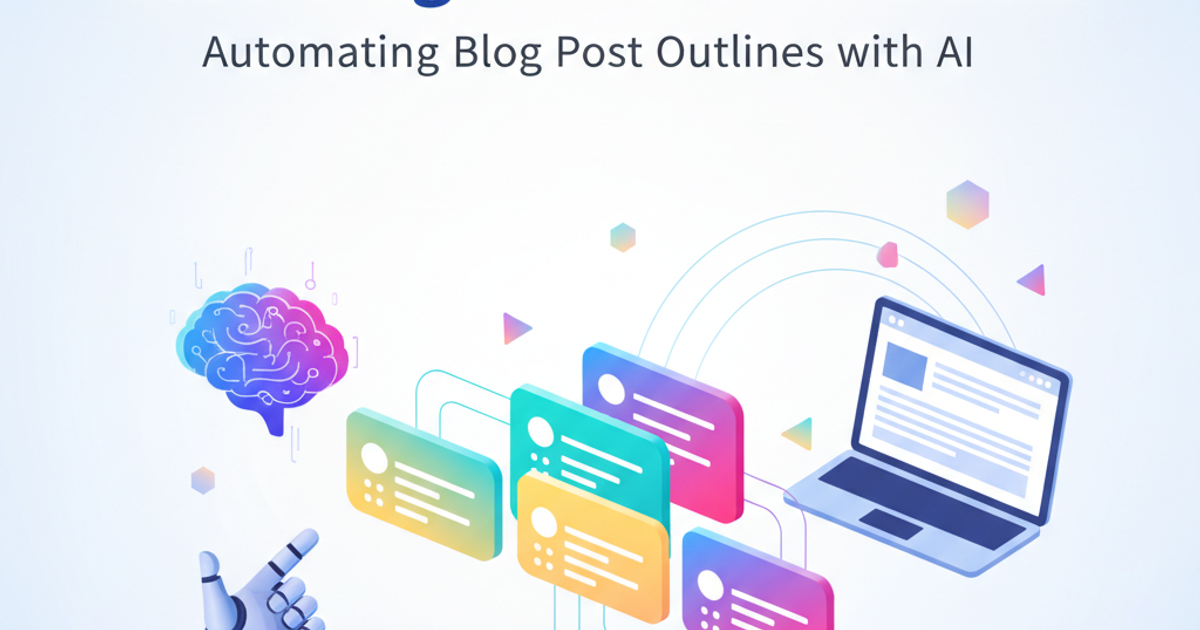
But what if I told you there’s a way to make that blank canvas… less blank? What if you could get a solid, well-structured foundation for your next blog post in a matter of minutes, freeing up your creative energy for the actually writing part? That’s where the magic of automating blog post outlines with AI comes into play.
Here at the BlogMe Blog, we’re all about making your content creation process smoother, smarter, and more effective. We’re diving deep into the world of automated blog content generation, and today, we’re focusing on a game-changer: AI-powered outlining.
From Blank Page Paralysis to Prompt Perfection
Remember the days of endless brainstorming sessions, sticky notes plastered everywhere, and trying to connect dots that seemed determined to stay separate? I certainly do. My old process often looked something like this: stare at the keyword, have a vague idea, write a few bullet points, get stuck, rewrite those bullet points, get more stuck, and repeat until I either had something passable or gave up and decided to write about cats instead (which, to be fair, is always a viable backup plan).
Then I started experimenting with AI tools. Initially, I was a bit skeptical. Could a machine really understand the nuances of good content structure? Could it grasp the flow needed to keep a reader engaged? The answer, I quickly discovered, was a resounding yes – especially when it comes to generating outlines.
Think about it: you provide a central topic or keyword, maybe a target audience, and a desired tone. The AI then takes that information and spits out a structured outline. It’s not just a random list of headings; it’s usually a logical progression of ideas, complete with sub-points that anticipate the kind of information a reader would be looking for. It's like having a seasoned editor sitting next to you, quickly sketching out the main arguments and supporting details.
For instance, let’s say I need to write about "sustainable gardening tips for beginners." Without AI, I might start with:
- What is sustainable gardening?
- Why is it important?
- Easy tips.
Okay, that's a start, but it’s pretty basic. Now, let's see what automating blog post outlines with AI can do. I input the topic and maybe specify "beginner-friendly" and "practical advice." The AI might generate something like this:
I. Introduction: Welcome to the World of Eco-Friendly Gardening! A. Hook: The growing desire for greener living. B. What is Sustainable Gardening? (Brief, accessible definition) C. Why it Matters (Benefits: environment, health, budget) D. What to Expect from This Guide
II. Getting Started: Laying the Green Foundation A. Choosing the Right Spot (Sunlight, water access) B. Soil Health is Key 1. Understanding your soil type. 2. Simple soil improvement techniques (composting, natural amendments). C. Water Wisely: Conserving a Precious Resource 1. Rainwater harvesting basics. 2. Efficient watering methods (drip irrigation, mulching).
III. Plant Power: Smart Choices for a Sustainable Garden A. Native Plants: Nature's Best Fit 1. Benefits of using local flora. 2. How to find and choose native plants. B. Companion Planting: Friends in the Garden 1. What is companion planting? 2. Popular and effective pairings. C. Crop Rotation: Keeping Pests and Diseases at Bay 1. The importance of rotating vegetables. 2. A simple rotation plan.
IV. Sustainable Pest and Weed Management A. Natural Pest Deterrents (Beneficial insects, homemade sprays) B. Weeding Without Harsh Chemicals (Mulching, hand-pulling)
V. Beyond the Basics: Eco-Conscious Garden Add-ons A. Composting 101: Turning Waste into Gold B. Attracting Pollinators (Bee-friendly flowers, water sources)
VI. Conclusion: Your Sustainable Garden Journey Begins Now A. Recap of Key Practices B. Encouragement and Next Steps C. Call to Action (e.g., share your journey, try one tip this week)
See the difference? This AI-generated outline is miles ahead. It provides a much more comprehensive and logical structure. It breaks down complex ideas into digestible sub-points and even suggests specific angles for each section. This dramatically cuts down on the time I’d spend trying to figure out what to include and how to organize it. This level of automated blog content generation is truly revolutionary for productivity.
You Might Also Like
- Choosing the Right AI Blog Writer: Your Ultimate Guidein AI Blogging
- SearchGPT's Seismic Shift: How AI is Reshaping Bloggingin AI Blogging
- AI Blog Post Generator for Beginners: Your Ultimate Guidein AI Blogging
Refining Your AI-Generated Outline: The Human Touch Still Matters
Now, before you think AI is going to replace us entirely, hold on a sec. The AI outline is a starting point, a powerful assistant, but it’s not the final word. The real magic happens when you combine the AI’s structural prowess with your own expertise, creativity, and understanding of your audience.
Think of the AI outline as a fantastic, detailed blueprint. You still need to be the architect who walks through it, adds the personal touches, ensures the flow feels natural for your specific readers, and injects your unique voice. I often find myself tweaking the headings, reordering some points, adding specific examples that come to mind from my own experiences, or even removing sections that might be too advanced for the blog’s typical reader.
For example, in the sustainable gardening outline, the AI might list "Advanced composting techniques." While that’s a valid topic, for a beginner audience, I might decide to simplify it to "Composting 101" and focus only on the absolute basics, or perhaps link out to another article for more advanced composting tips. This kind of refinement is where your human insight shines.
This iterative process—AI generation, human refinement—is key to leveraging automating blog post outlines with AI effectively. It’s about working smarter, not just faster. You get the benefit of a structured, comprehensive starting point without the initial creative slog, and then you apply your unique knowledge to make the content truly shine. This synergy is what helps in creating high-quality content consistently.
Boosting Your Content Workflow with AI Outlines
So, how does this actually translate into a better workflow? Let’s break it down:
- Speed to First Draft: The most obvious benefit. Instead of spending hours on the outline, you get a solid framework in minutes. This means you can jump into writing your first draft much faster, significantly reducing the time from idea to published post.
- Overcoming Writer’s Block: When that dreaded blank page stares back, an AI-generated outline can be the perfect antidote. It gives you a clear path forward, breaking the task into manageable chunks. You can tackle one section at a time, making the overall writing process feel less overwhelming.
- Ensuring Comprehensive Coverage: AI tools are trained on vast amounts of data. They can often identify related sub-topics and angles you might have overlooked, ensuring your blog posts are thorough and cover the subject matter comprehensively. This is crucial for SEO and for establishing authority in your niche.
- Maintaining Consistency: For teams or even solo bloggers aiming for a regular publishing schedule, AI outlining can help maintain a consistent structure and quality across different posts. It standardizes the initial planning phase, making the content creation process more predictable.
- Ideation and Exploration: Sometimes, you might have a broad topic but aren't sure of the best angle. Using AI to generate multiple outline variations can help you explore different perspectives and choose the most compelling approach for your audience. This is a fantastic form of automated content ideation.
I’ve found that incorporating AI outlining into my routine has genuinely transformed how I approach content creation. It's like I’ve unlocked a new level of productivity. Instead of dreading the planning phase, I actually look forward to seeing what structure the AI suggests, knowing it will give me a fantastic head start. This frees up so much mental bandwidth to focus on crafting compelling narratives, finding the perfect examples, and ensuring the final piece truly resonates with our readers here on the BlogMe Blog.
The key is to view AI not as a replacement for human creativity, but as a powerful collaborator. It handles the heavy lifting of structuring information, allowing you to focus on the artistry of writing, the strategy of SEO, and the connection with your audience. If you haven't explored automating blog post outlines with AI yet, I highly encourage you to give it a try. You might just find your content creation process becomes significantly more enjoyable and efficient. Happy outlining (and writing)!
BlogMe Team
Expert insights and analysis to keep you informed and ahead of the curve.